

Journal · 27 November 2026
When does a vase stop being a vase and become art?
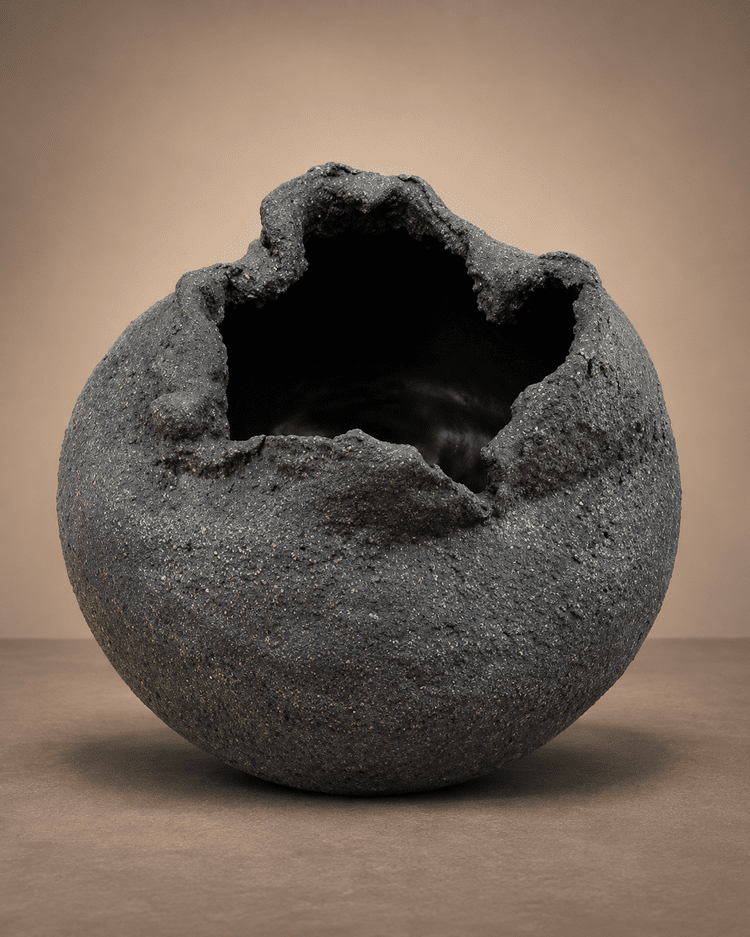
On the border between pottery and sculpture, and on what changes when we look at a vessel without asking it to be useful.
Ceramics has been with us for millennia. Vessels, bowls and vases were made to hold, keep and carry. And yet, very early on, they began to carry something their function didn’t require: a rim curved more than it needed to be, an incised line, a colour. The water didn’t ask for it. Someone wanted it.
That gap between what a piece needs and what its maker chooses to give it is as old as the craft itself. In contemporary ceramics, it is also where almost everything happens.
A vase that doesn’t need flowers
What happens when a vase no longer needs flowers to justify being there?
An empty vase on a table is still a vase. What changes is what we see in it. Without a bunch of flowers pulling the eye away, other things come forward: the proportion between neck and body, the weight of the base, the texture of the surface, the exact point where the light bends around the wall.
Its usefulness doesn’t disappear; it simply stops being the only thing that matters. And at that moment the object starts behaving like a sculpture: something you walk around, something that changes depending on where you stand.
When the vessel entered the museum
From the mid-twentieth century on, a few artists forced this question into the open.
Picasso visited the Madoura pottery in Vallauris in the summer of 1946. There, the master potter threw hollow forms that Picasso then reshaped; one of them became the head of a faun. He came back in the summer of 1947 and, before the end of 1948, had made some two thousand unique pieces. He arrived at clay as a painter, not a potter, and perhaps that is why his time with it moved the line between art and craft so far.
More than half a century later, another artist did it from inside the craft. In 2003, Grayson Perry won the Turner Prize with classically shaped vases covered in figures, patterns and text. It was the first time the prize had gone to a ceramicist. His pots look decorative at first glance; what they say is not.
Form as language
As a ceramicist, I am especially drawn to that border between pottery and sculpture. The wheel makes it possible to build forms that start from a traditional structure and move towards something much freer.
A narrow opening, a pronounced curve, a symmetry that shifts, or a glaze that changes how we read the volume can transform the character of a piece. Even the empty space a vase encloses is part of its composition.
A piece on the border
In the studio there is one piece that sits right on that border: the volcanic black sphere. It is a black, textured sphere with an irregular opening. The only thing that still ties it to a vessel is that opening. Is it still a container if no one is ever going to put anything inside?
Living with a piece
A ceramic piece can answer the architecture of a room, keep company with wood or stone, or become the centre of a space.
It doesn’t need a gallery to be seen as art. It can sit on a console, a shelf or the table where we eat, and show different nuances as the hours and the light change.
At Alfar Estudio, pottery and sculpture live side by side without rigid boundaries: the same hands throw a bottle and model a bust.
Perhaps a vase doesn’t need to stop being a vase to become art. Perhaps what needs to change is the way we look at it.
The volcanic black sphere has its own page in Work. If you’d like to see it in person, the Madrid and Jávea studios welcome visits by appointment.
More from the journal
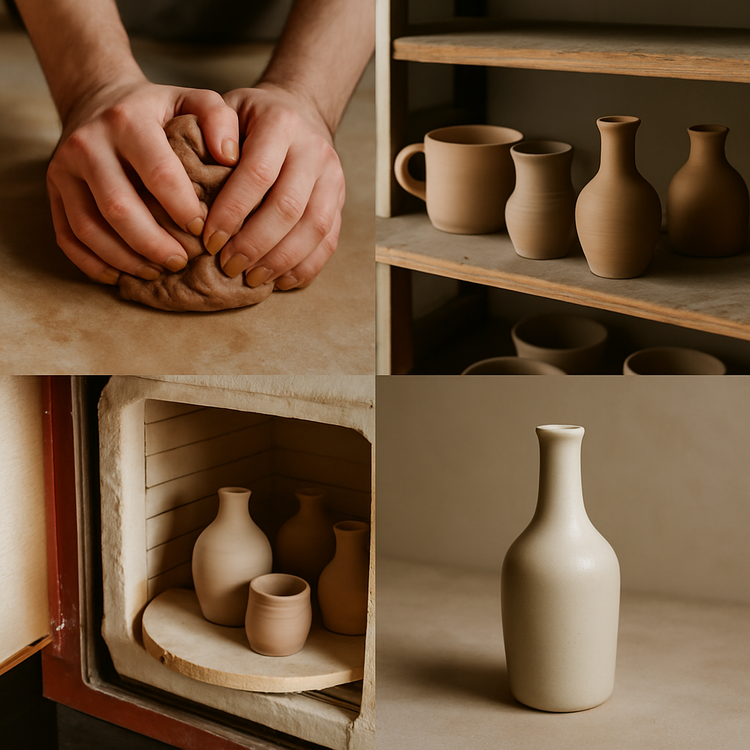
The Real Time Behind the Ceramic Process — And Why It Affects the Price of Each Piece
24 June 2025
When you buy a handmade ceramic piece, you’re getting much more than a beautiful object: You’re buying time, attention, patience, and a part of the maker.
Read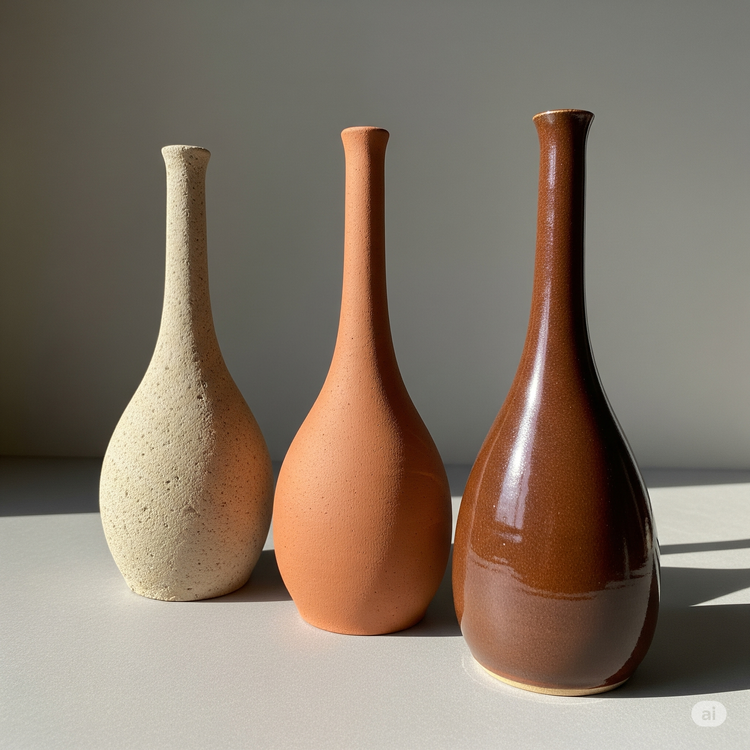
Tips to Care for Your Pieces
23 June 2025
Every handmade ceramic piece has its own story, texture, and way of being in the world. Some are functional, others sculptural, others simply invite you to look—or…
Read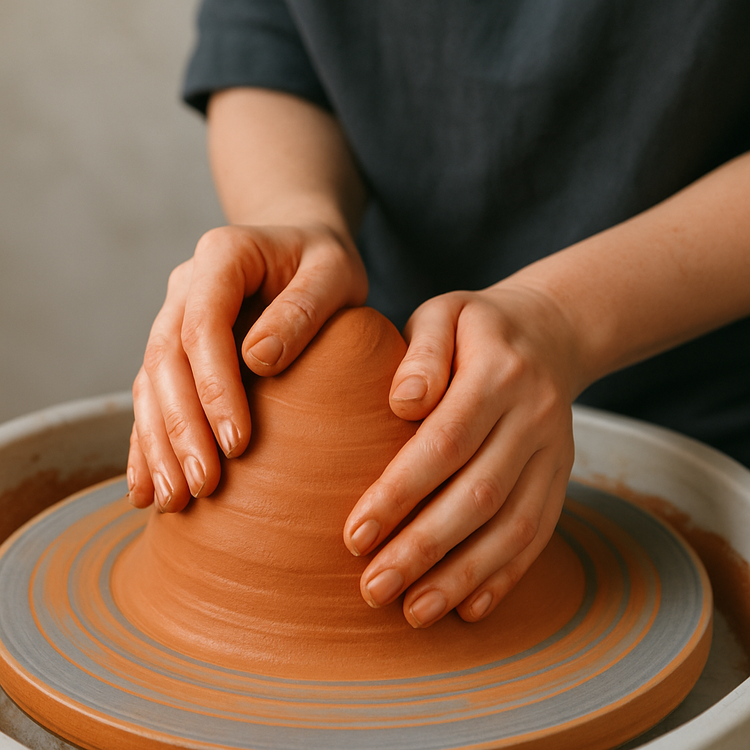
Why Are We So Drawn to Touching Clay With Our Hands?
23 June 2025
You don’t need to be a potter to feel it. Just touching clay once is often enough to understand there’s something special about it.
ReadWould you like to see the pieces?